How Perspective pairs Convo conversations with in-depth interviews
Isabel van der Voort · Design Researcher at Perspective
Design researcher at Perspective since 2021, with a focus on inclusive and human-centred research

At Perspective, we are always exploring ways to deepen understanding without losing the human element that sits at the heart of good research. Recently, we incorporated Convo into a research project and found it to be a valuable complement to our traditional in-depth interview approach.
Before and after the interview
We used Convo in two different ways. For some participants, Convo conversations took place before the interview, helping us gather background information and key themes before sitting down together. For others, Convo was used after the interview to capture additional reflections that emerged once participants had more time to think.
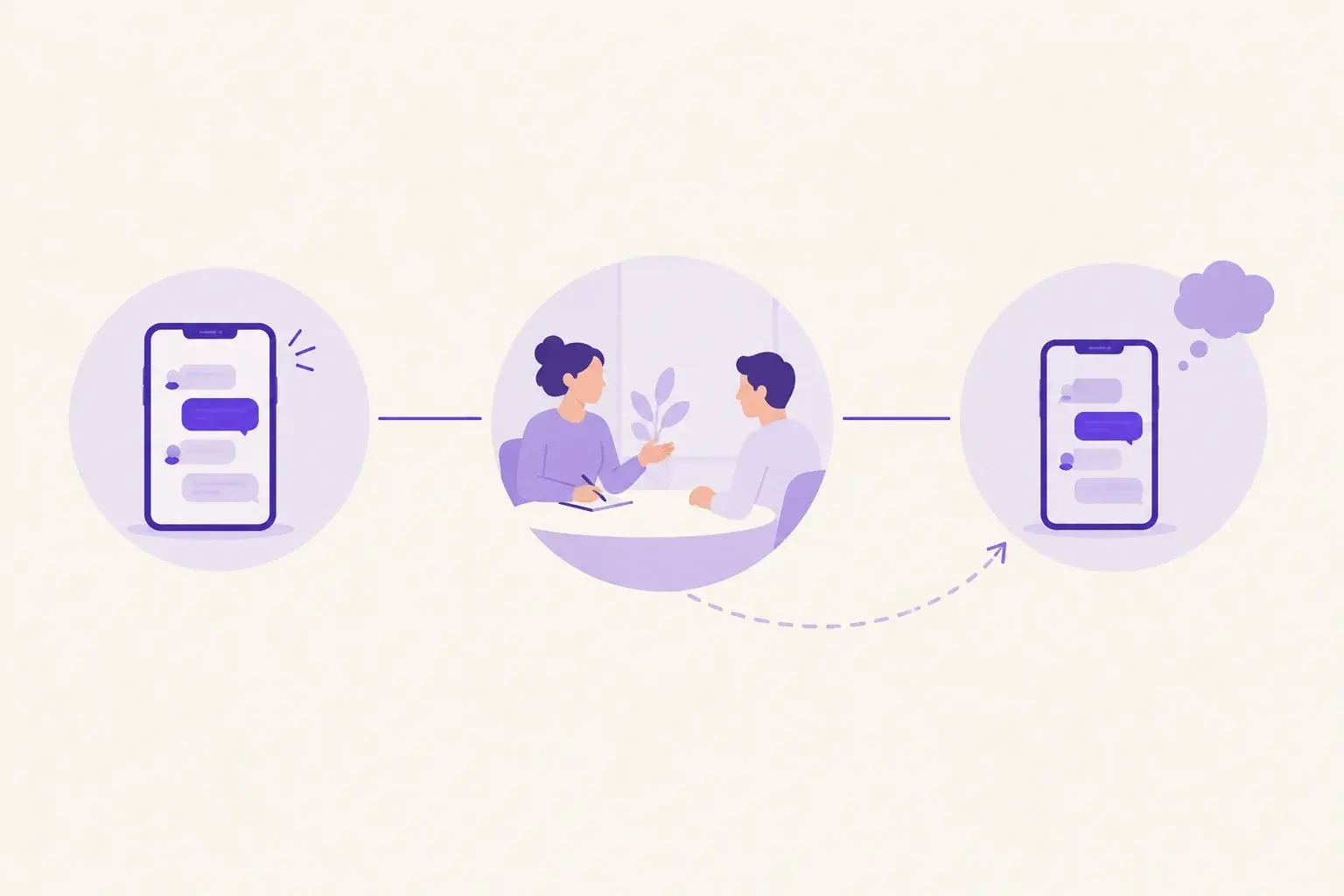
What stood out was the conversational nature of the experience. Rather than feeling like a survey, participants engaged in a dialogue, which many found interesting and easy to navigate. The format encouraged people to elaborate on their thoughts and provided a different way of expressing experiences and opinions.
We also appreciated the fact that Convo has multilingual support. Our participants can respond in the language that is most comfortable for them. We believe that this encourages more authentic responses from the participants.

Participants responded positively to the conversational format, describing it as both engaging and natural, which encouraged them to share their thoughts in greater depth.
Another layer of insight, not a replacement
From a researcher’s perspective, Convo did not replace the value of human-led interviews. The interviews remained essential for understanding nuance and probing deeper into complex emotions. What Convo did provide was another layer of insight. It helped surface themes early, identify areas worth exploring further, and capture perspectives that might otherwise have been missed.

The combination proved particularly useful because it joined the strengths of both approaches. Human researchers brought context, interpretation, and empathy to the process, while AI-moderated conversations enabled us to gather input efficiently and more comprehensively, helping us build a fuller picture of the topics being explored.
What we found most valuable was that Convo did not replace the interview process, it strengthened it. The conversations helped us enter interviews better prepared and, in some cases, continue the dialogue afterwards, giving us a richer and more complete understanding of participants’ perspectives.
Where this leaves qualitative research
Our experience suggests that the future of qualitative research is not about choosing between human and AI-led approaches. Instead, it’s about using AI thoughtfully to extend the reach of human researchers, creating richer and more comprehensive insights while keeping people at the centre of the process.

Perspective is an Amsterdam business-design agency of strategists, designers, visual thinkers and researchers that helps teams create new value for end users and their organisations. Isabel van der Voort is a design researcher at Perspective, where she has worked since 2021 on human-centred and inclusive research. The images in this article are AI-generated illustrations, not photographs of the project.
Frequently asked questions
Yes. Upload recordings or transcripts of interviews your team ran and they sit in the same study as the AI-moderated conversations, so themes, quotes, highlight reels and the Research Assistant draw on both.
No. Convo runs interviews in more than 40 languages, so participants answer in the language they are most comfortable in, as Perspective’s did.
Perspective ran Convo conversations before some in-depth interviews, to gather background and early themes, and after others, to capture reflections once participants had time to think. The human-led interviews stayed essential for nuance and depth, while the AI-moderated conversations gathered input efficiently and more comprehensively, and together they built a fuller picture of the topic.